Beauly

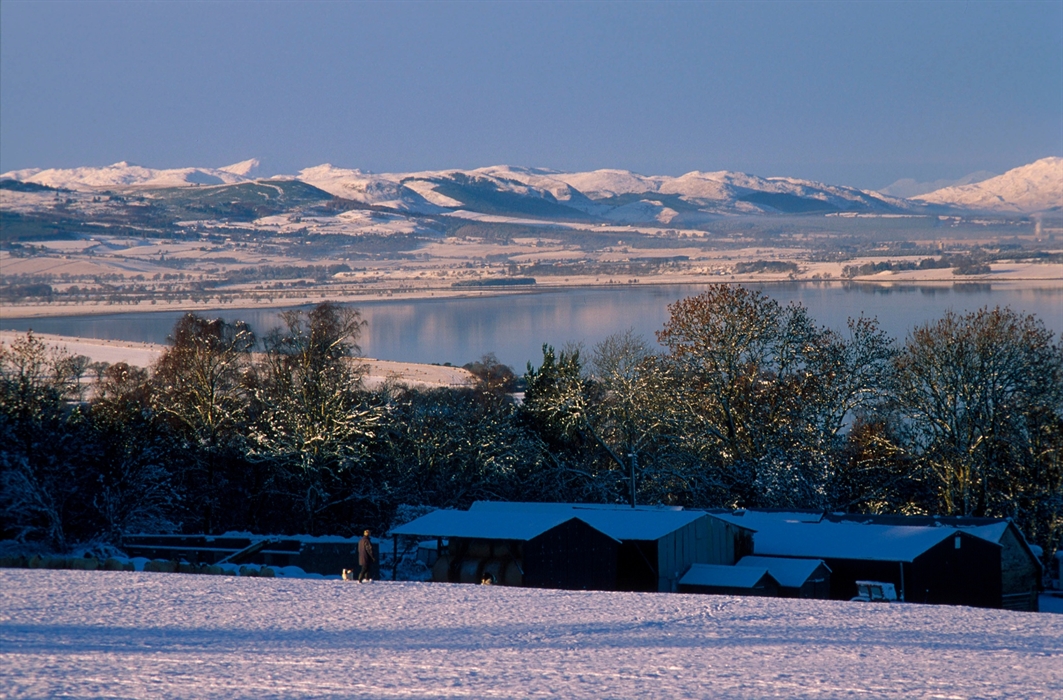
The sleepy stone-built village of Beauly lies ten miles west of Inverness, at the point where the Beauly River - one of Scotland's most renowned salmon-fishing streams - flows into the Beauly Firth.
Beauly is ranged around a single main street that widens into a spacious marketplace, at the north end of which stand the skeletal red sandstone remains of Beauly Priory. Founded in 1230 by the Bisset family for the Valliscaulian order, and later becoming Cistercian, it was destroyed during the Reformation and is now in ruins.
The name Beauly was bestowed on the village by Mary, Queen of Scots, who, when staying at the priory in the summer of 1564, allegedly cried: Ah, que beau lieu! (What a beautiful place!). In fact, the description 'beau lieu' was bestowed by the Lovat family, who came to the region from France with the Normans in the eleventh century.
Among the more notorious members of this dynasty was Lord Simon Lovat, whose legendary misadventures included a kidnap attempt on a nine-year-old girl, followed by forced marriage to her mother. He was outlawed for this, but went on to play an active role in the Jacobite uprisings, expediently swapping sides whenever the one he was spying for looked likely to lose. Such chicanery earned him the nickname 'The Old Fox of '45', but failed to save him from the chop: Lovat was eventually beheaded in London (ironically enough for backing the wrong side at Culloden). The Victorian monument in the square, opposite the Priory, commemorates the more illustrious career of one of Simon Lovat's descendants, Simon Joseph, the 16th Lord Lovat, who founded a fighting unit during the Boer War.