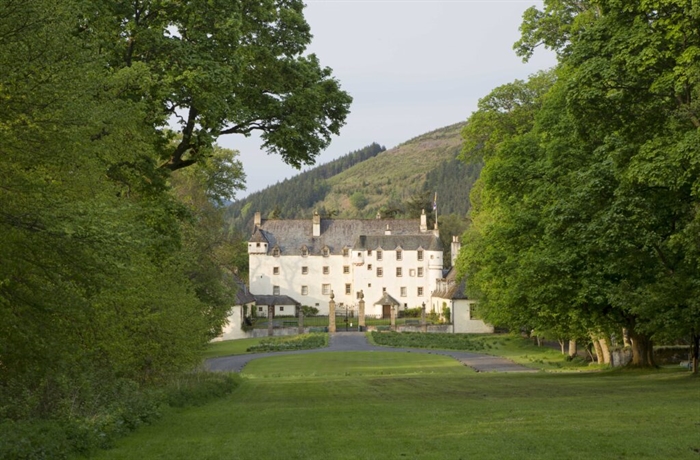
Traquair House - Images
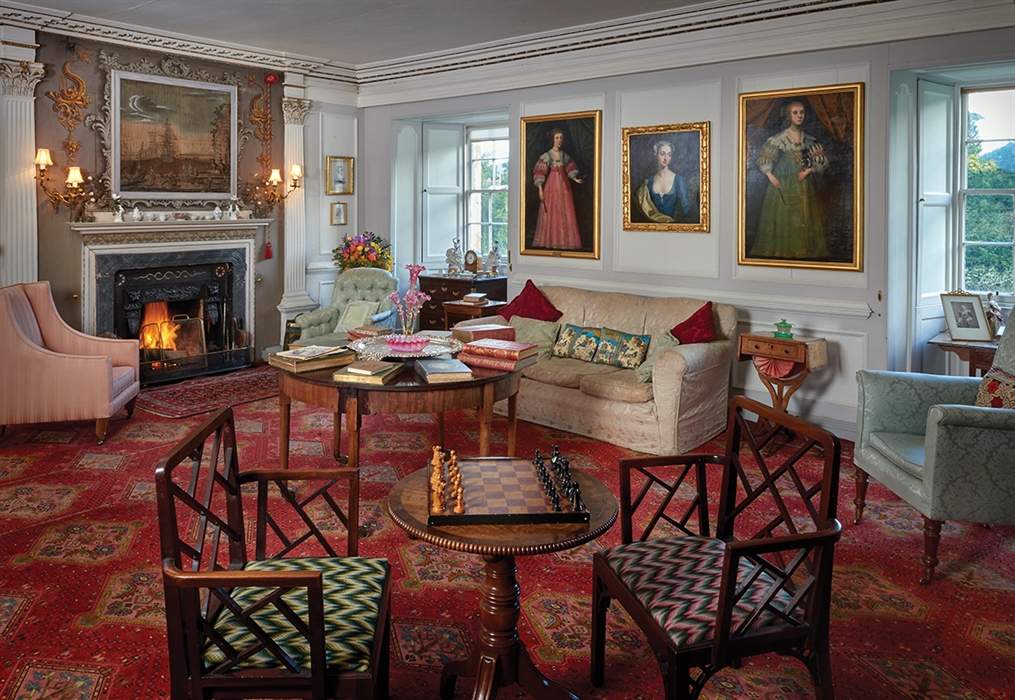
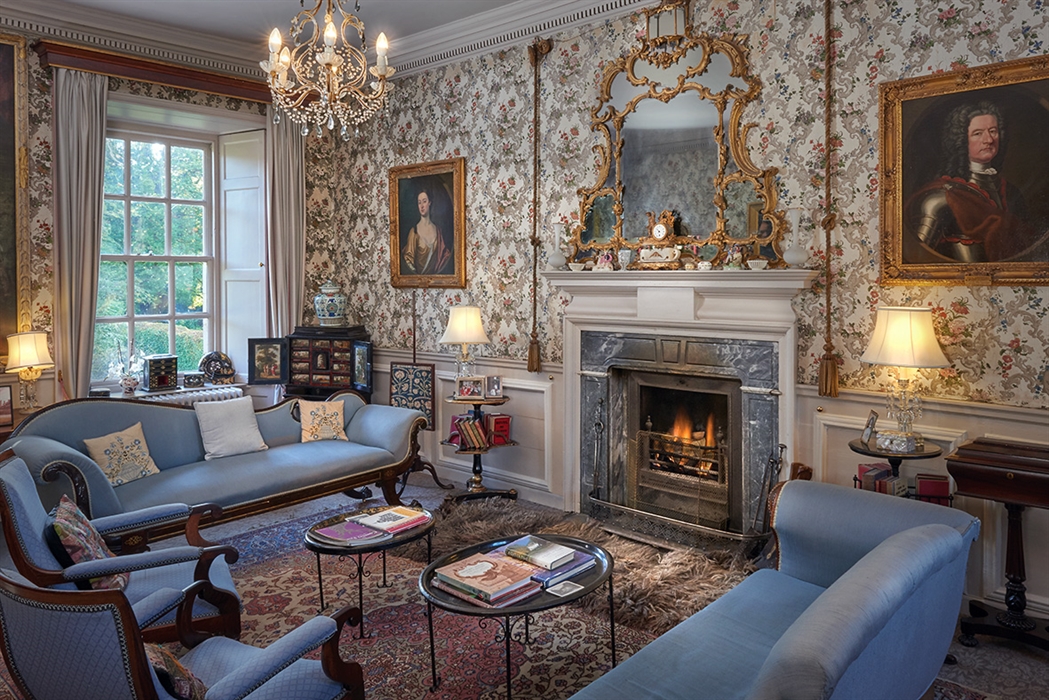
The High Drawing Room
When completed in the 16th century, the High Drawing Room ceiling was decorated with painted beams and panels: typical of Scottish painted ceilings at that time. The fragments which you can see today were discovered and restored in 1954.
In the middle of the 1700's the fifth Earl of Traquair who had visited Italy as a young man, covered the beams and paneled the walls in the classical style which remains today.
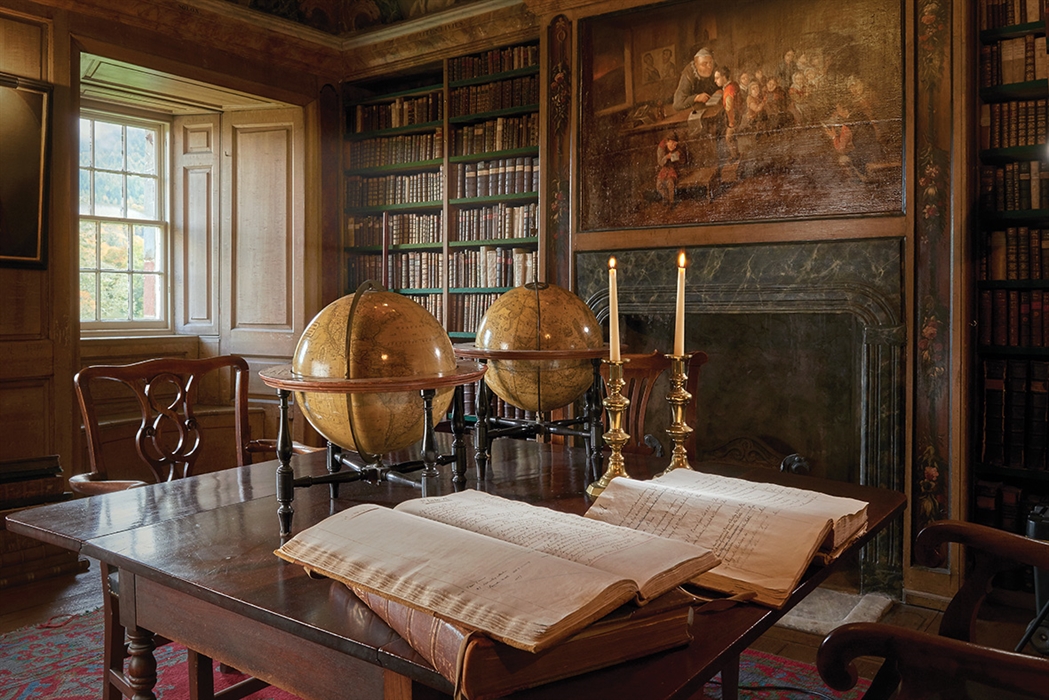
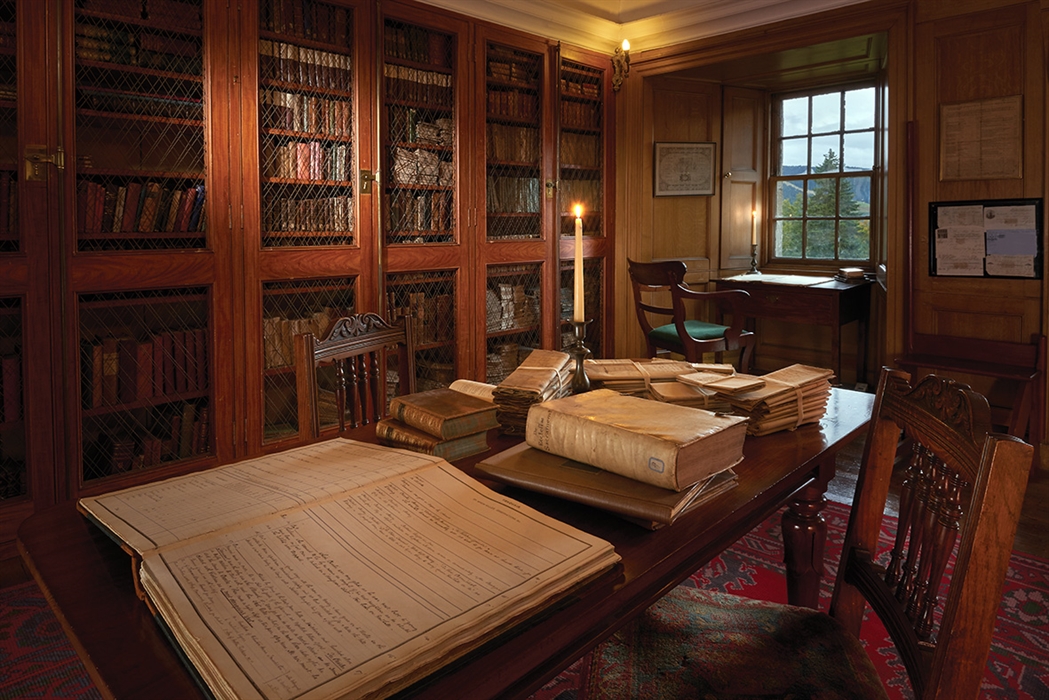
The Library
Created between 1700 and 1740, the Library has a collection of about 3000 books and has remained almost intact since it was first formed.
Portraits of philosophers and poets around the ceiling cornice are used for cataloging the books, which are numbered and ordered below them.
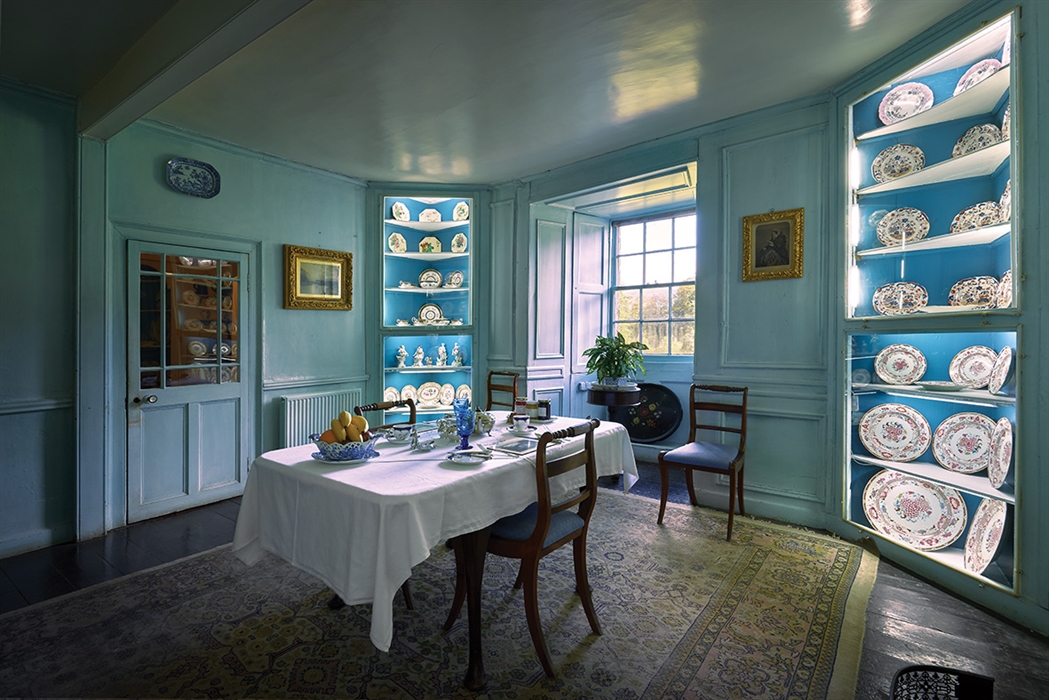
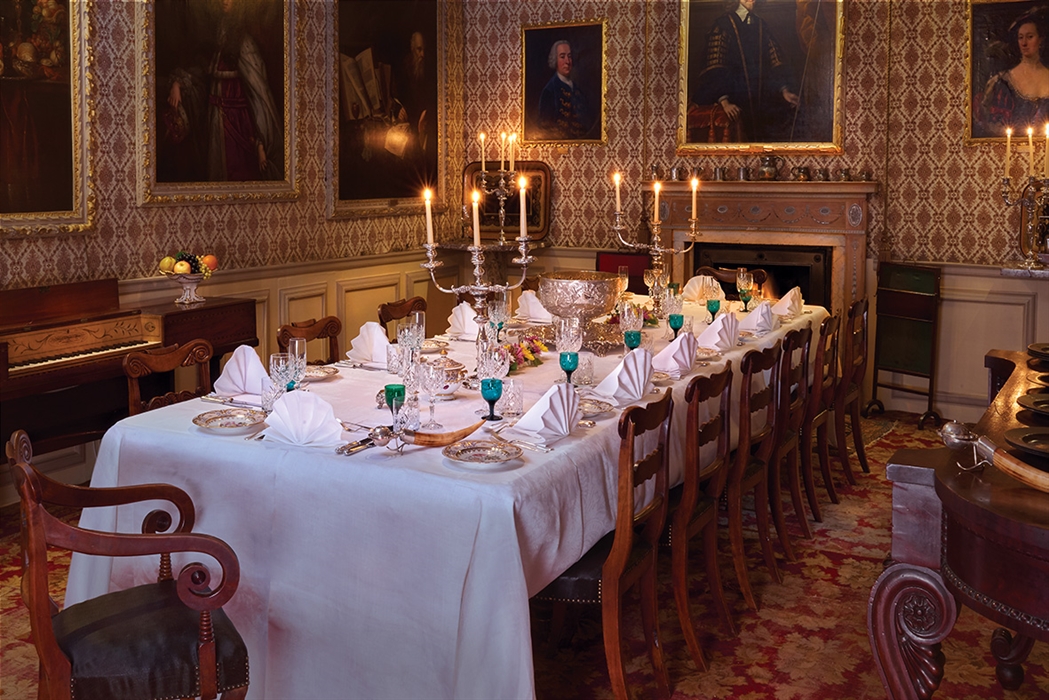
The Dining Room
The Dining Room in one of the "modern" wings (added to the house in the late 1600's). The decoration of the room now is mainly Victorian. The wallpaper was purchased at the Great Exhibition in 1851. On the walls around the room you can see portraits of the majority of Earls of Traquair (including the 1st Earl of Traquair).
The Chapel
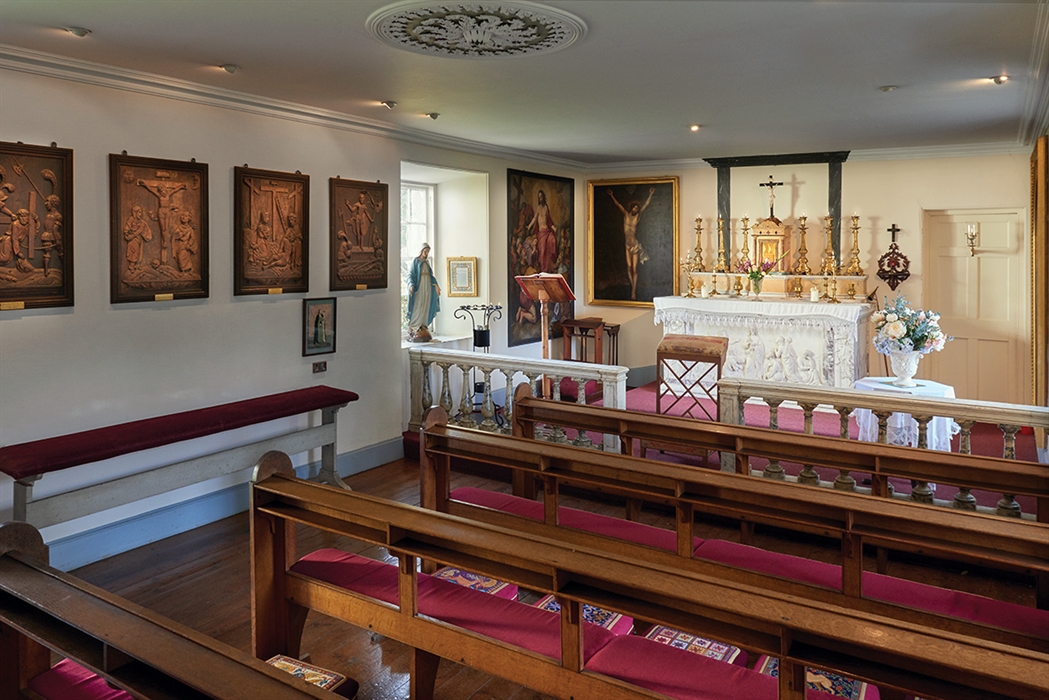
The chapel was made after the Catholic Emancipation Act in 1829, which allowed Catholics to worship openly again. Previously the room was a billiard room and it is situated immediately over the Brew House. This is quite obvious when brewing is taking place! The white marble altar was brought over from Italy by Henry Maxwell Stuart and is the work of the Italian sculptor Brumidi. The carved oak panels on the walls are scenes from the life of Christ. They are Flemish and were brought to Scotland by Scottish craftsmen who travelled through the Low Countries in the early part of the 1500’s. In former times the family sat behind the curtains at the back of the chapel where there was a fire. This area has now been made into a sacristy.
Traquair Grounds
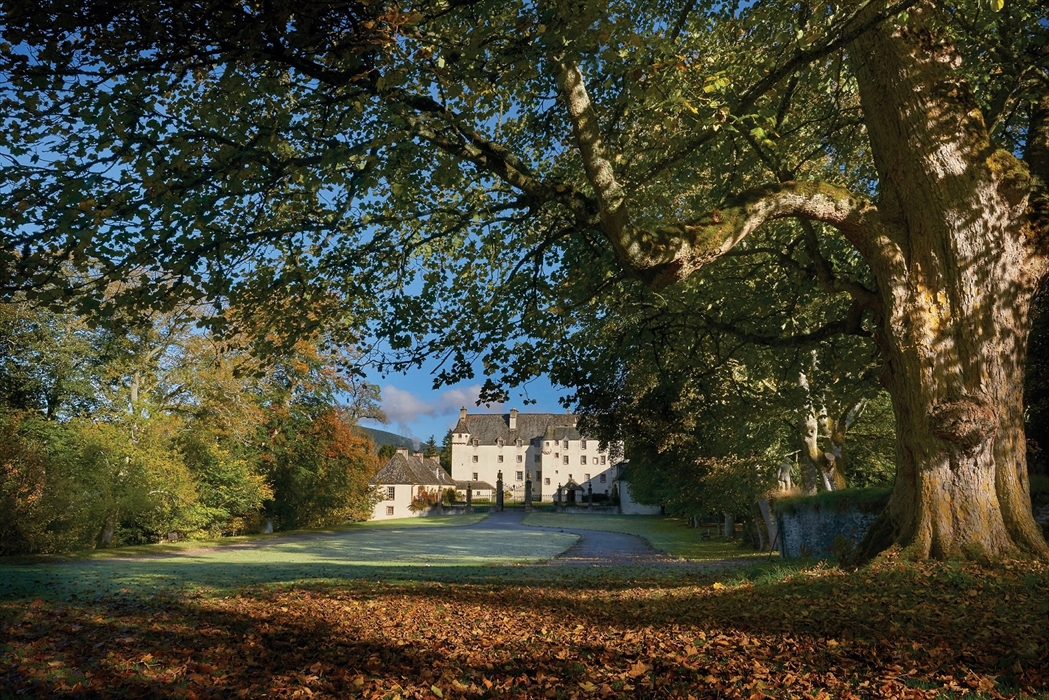
Originally part of the Ettrick Forest Traquair was originally surrounded by its woodlands. Even today it nestles amongst the most wonderful trees planted mainly in the 1870's and containing huge Douglas Firs, Limes, Ash, Horse Chestnut and Beech. Perhaps, most spectacular of all is the yew tree circle thought to have been part of the old Ettrick Forest and certainly some of the oldest yews in Scotland.
The woodland trails around the house include Lady Louisa's favourite walk and a gentle stroll down to the River Tweed with striking views of the Tweed Valley.
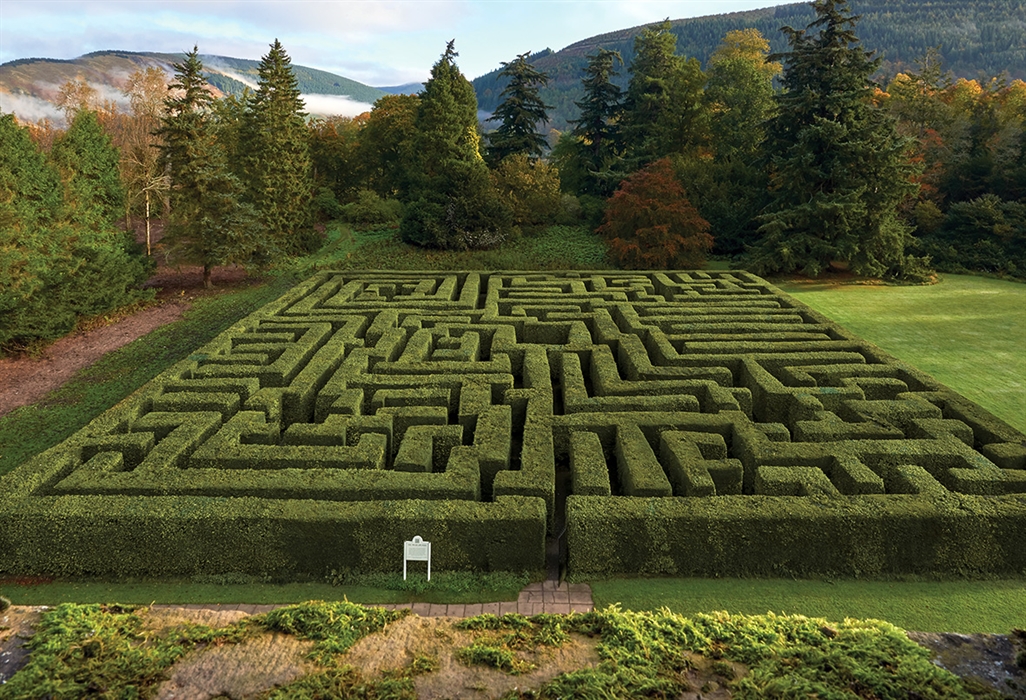
The Maze was planted in 1981 and is one of the largest hedged mazes in Scotland covering over half an acre and it is 1/4mile to reach the centre.
The Maze is situated at the rear of the house where originally a par terre garden was laid out in the eighteenth century. The terrace walls provide an excellent vantage point for parents to try and direct their children out of the maze.
Traquair Events
Traquair House hosts a variety of events through out the year. Please see two of our events listed below. Please visit www.traquair.co.uk for more details and full 2009 event listing:
TRAQUAIR MEDIEVAL FAYRE
Saturday 23rd and Sunday 24th May. 11.00am – 5.00pm
A superb weekend that will transport you back to ancient times. Royal Medieval Pageant, falconry, archery, equestrian displays, living history, early music, jesters and children’s entertainment.
TRAQUAIR ART IN ACTION WEEKEND
Saturday 1st August and Sunday 2nd August 11am – 6pm
Traquair Fair is having a year off in 2009. In its place we are hosting an Art in Action event with a superb array of arts, crafts and workshops in which all can participate.
Traquair Brewery
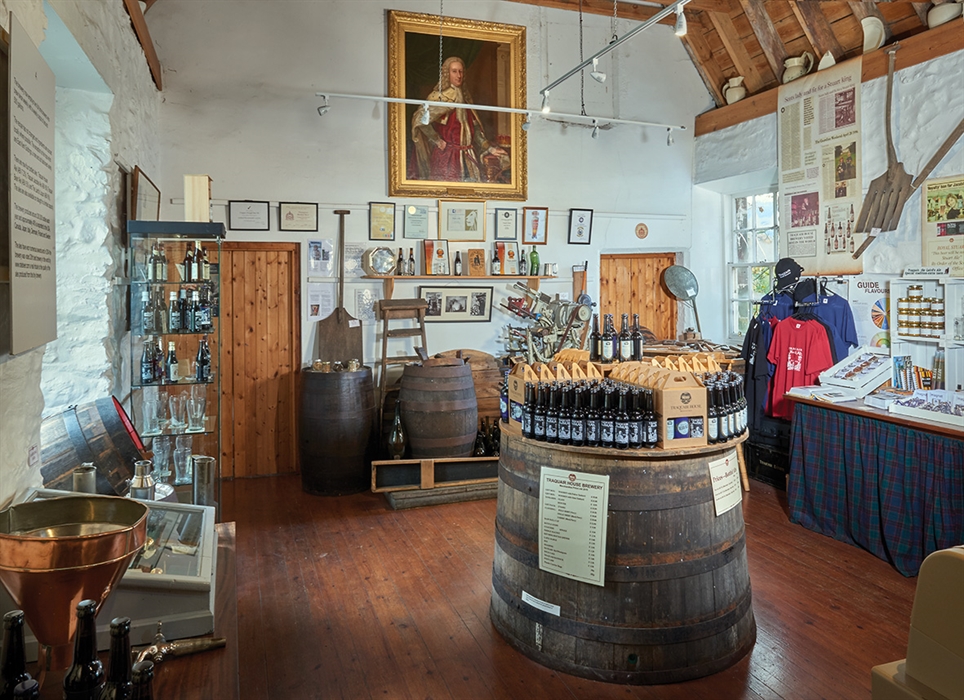
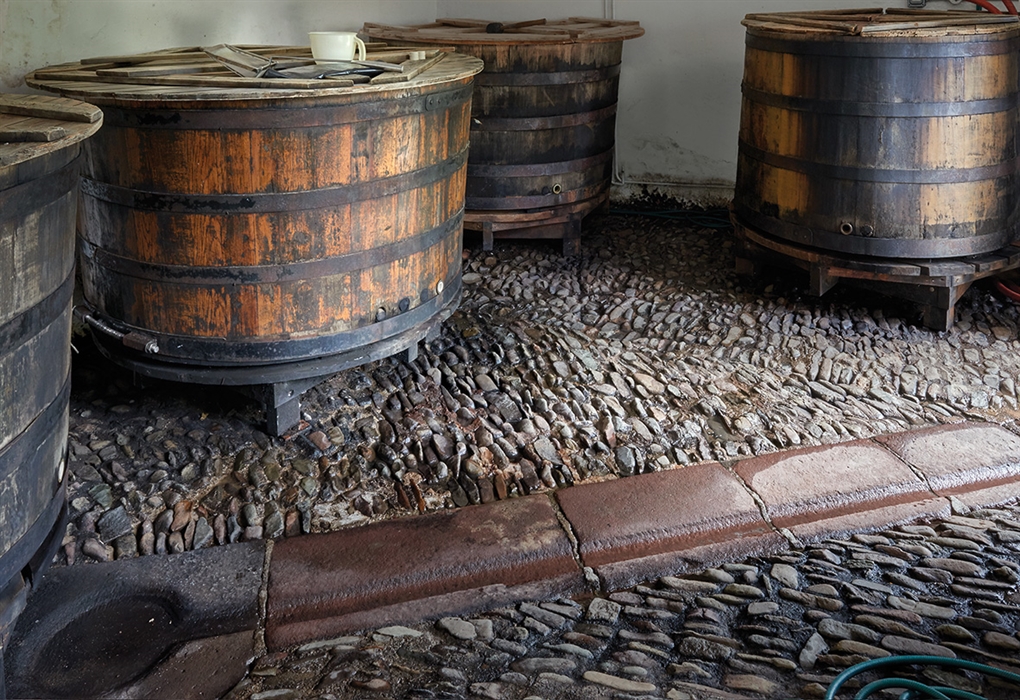
Brewing at Traquair originally took place in the kitchens of the house but in the early 1700’s the present brewery was established in one of the new wings built in 1694.
During the eighteenth century most large country houses would have had a brewery as ale was considered a cheap and nutritional drink. At Traquair, it also appears to have been part of the servants’ wages!
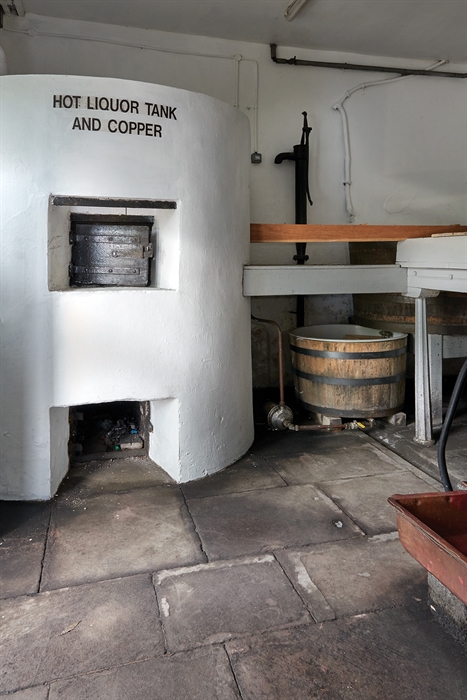
The brew house was furnished with a 200 gallon copper bought in 1738 at the cost of
£8 10s and wooden fermenting vessels made from Russian memel oak.
The ale produced was either a strong dark ale or small beer which was made without using hops.
By the early 1800’s there were many more commercial breweries and brewing at Traquair became an expensive luxury the family could not afford.
The brewery was closed and the brew house was left to become the repository for the family’s unwanted furniture and other junk.
In 1965 Peter Maxwell Stuart, the twentieth Laird, was undertaking a huge spring cleaning operation with his wife Flora, in order to open the house more fully to the public.
When he discovered the brewery underneath centuries of family junk he was surprised to find the entire collection of brewing vessels and equipment had survived intact.
After a thorough cleaning operation the brewery was ready to be used again for the first time in one hundred and fifty years.
Peter enlisted the help of a friend, Sandy Hunter of Belhaven Brewery and together they researched the Traquair archives and developed the recipe for a traditional Scottish Ale.
The first brew took place in 1965 and the finished product was bottled at Belhaven and sold at Traquair. However, even at a price of 3/- (15p) per bottle it proved hard to sell.
During the next few years the Laird continued brewing several times a year and he also numbered each bottle with a brew and bottle number. These early bottles are now collector’s items.
In the 1970’s the Campaign for Real Ale became an important consumer movement that revived and interest in traditional beer and championed small independent breweries. Traquair was rightfully recognised as a pioneer in its field and demand for the ale increased.
The brewery received an increasing amount of media coverage and the quality of the ale was also praised. It achieved the highest accolade in Michael Jackson’s World Guide to Beer which sparked interest from overseas,
Commemorative brews were produced such as the 100th Brew, the 250th, Silver Wedding Ale and even a 21st Birthday for Peter’s daughter Catherine.
In the mid 1980’s the first brewer was employed and the first exports undertaken to the USA.
In 1990 Peter Maxwell Stuart died and the management of the brewery was taken over by his daughter, Catherine.
Demand for the ales continued to grow both in the UK and overseas and in 1993 the brewery was expanded into the adjoining stable block which doubled the production capacity.
The brewery now employs two full time brewers who brew twice weekly with a weekly output of around 500 gallons.
There are now three bottled ales; Traquair House Ale (ABV 7.2%), Traquair Jacobite Ale (ABV 8%) and Traquair Bear Ale (ABV 5%). The ales are also available on draught in a limited capacity.
The brewery now produces around 200,000 bottles each year and approximately 40% is exported to the USA, Canada, Japan, Italy, Hong Kong, France and Sweden.
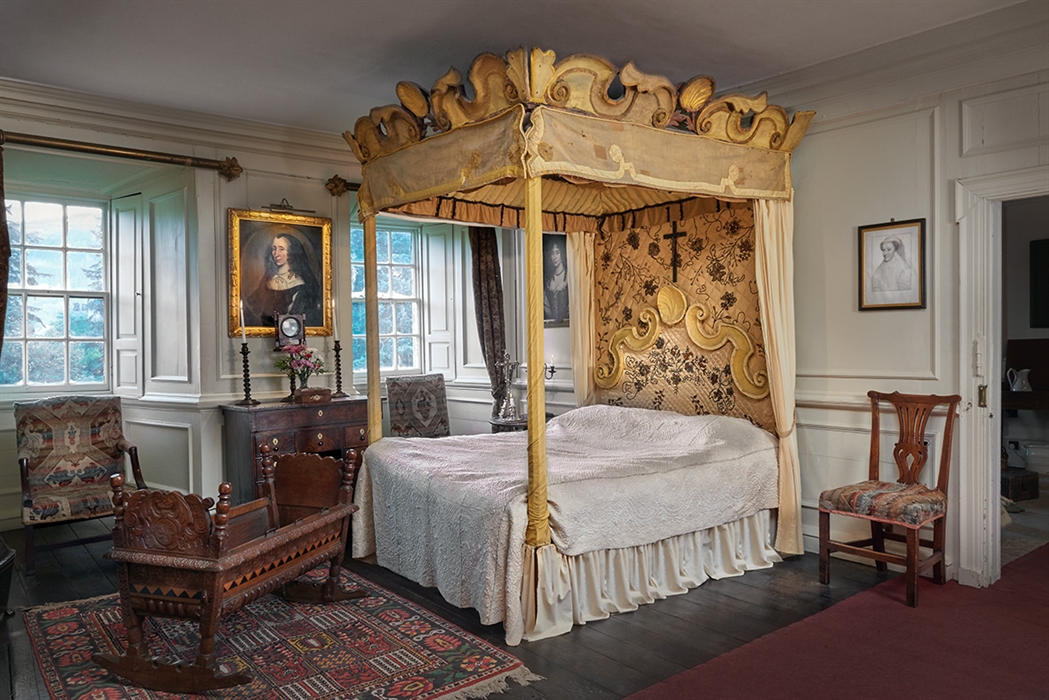
The Blue Bedroom
The Blue bedroom is suitated on the ground floor in the 18th century wing of the House and is available on a bed and breakfast basis. The room is furnished with antique furniture, a canopied bed, private bathroom and has a lovely view over Cupids Garden.
The White Bedroom
The White bedroom, like the Blue bedroom is suitated on the ground floor in the 18th century wing of the House and is available on a bed and breakfast basis. The room is furnished with antique furniture, a canopied bed, private bathroom and has a lovely view over Cupids Garden but has an additional view of the Wine Glass Lawn at the front of the House.
The Pink Bedroom
The Pink bedroom is in the main House and is available on a bed and breakfast basis. The room is furnished with antique furniture, a canopied bed, private bathroom and has a lovely view over the maze.
Grading & Awards